Meet The Neighbors August 23, 2011
Posted by Tom Wells in Introductions.add a comment

Statistically, the likelihood that there are other intelligent races beyond our own on Earth is a near certainty. So you gotta wonder; where are the aliens? It’s my guess that they are out there somewhere and that they either don’t know about us here on Earth, or we are too remote and/or technologically insignificant to bother. There were pockets of humanity who went uncovered right up until a century ago. There are some places like Papua New Guinea where the native population still practiced ritual cannibalism until modern times.
We humans could be the forgotten tribe of intelligentspecies in our corner of the galaxy. There might even be alien anthropologists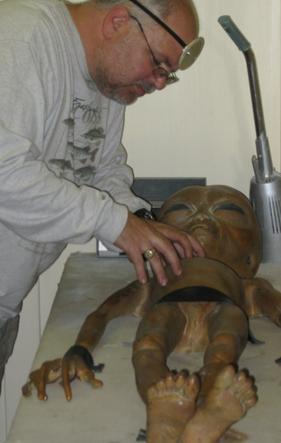 studying us in our native setting on Earth. Given our proclivity towards war with each other, I imagine that if there were one or more alien races who are aware of our existence, they probably put no more thought to us than our modern society has put towards the isolated tribes in New Guinea.
When will we finally meet our neighbors? The hill people of New Guinea  no longer practice cannibalism for the same reasons the native people of the Andes no longer practice ritual sacrifices of children. Modern civilization finally expanded to their corner of the world. As vast as the galaxy is, it is unlikely that any more advanced civilization will need to expand so far as to overrun our own, but it stands to reason that someday, humans will venture out beyond our solar system and that will certainly be when we discover we are not alone.
This is the foundation for the universe in my stories. What will happen when the people of Earth finally step off of our porch and into the galactic neighborhood? Keep reading the stories from a collection I call the Encyclopedia Of The Future and you will find out.
Next Step of Development July 24, 2011
Posted by Tom Wells in Introductions.add a comment
The next step in the development of my site has started. I am building my Encyclopedia of the Future. This will be where I start to make my stories more interactive. The stories from the Encyclopedia of the Future have many references to technology not available on Earth today. The stories themselves will explain these technologies briefly as necessary to advance the story, but the story’s pace and interest will seldom allow a longer explanation of the future technology referenced. This is the place where the technology can be listed and explained in further detail.
I will place links in stories, and hopefully publishers of my stories will be willing too to keep these links as an added element of interest for readers. It is part of my attempt to be a participating part of the expansion of the rapidly changing publishing world.
Feedback July 4, 2011
Posted by Tom Wells in Introductions.add a comment
Feedback
In most professions, like that of my day job as an architect, your client is an active participant in your work. If you flip burgers for a living, the customer is often all to ready to give you feedback. In architecture, my clients are involved in the evolving design that will be their building. As a doctor, your patients have to give you feedback for you to help them. In writing short stories though, things are different. Some would say that the readers are your client, but to me, they are like the users of a building. They didn’t have a direct involvement in the building’s construction in the way readers of short stories don’t have a direct say in choosing the stories the editor of a publication selects from the hundreds of submittals they receive.
Your client therefore is the editor/publisher of the venue you submit your short story to. But unlike my other examples, there is often no interaction between the client and the writer during the development process. This is good in the way that a writer is free to develop a story they way their imagination is leading them. However this is also a formula for a great deal of rejection, especially early on in a carrier. A writer now has to shop their stories cold.
Each time I bring my building designs to the client, I get to put the pictures up on a wall and explain all of the inspirations for my design. I can guide the client to see why I have located rooms where they are and how the corridors provide movement and I can explain why the look of the façade is designed the way it is. The client listens and often gives great feedback on what they like and what they need changed to fit their needs.
When I send a story for consideration at an anthology, I can’t put it up on a wall and explain what motivates my characters and I can’t listen to the editor’s thoughts on my story and how it could possibly be made to fit what they are looking to publish. They get too many submissions to personally respond to every story on a level that could help the writer know if they are close to what they are looking for, or how the story failed to spark their interest.
This leaves you feeling out of step as the rejections keep growing. The only remedy is perseverance and the belief that you are writing stories that someone wants to read. The trick is, finding that publisher who sees something in your story that they feel their readers will want to read. I have not found that fit with a publisher yet, but I still keep trying.
1st Novel June 15, 2011
Posted by Tom Wells in Introductions.add a comment
I have posted the first two chapters of my first novel length manuscript called The Red Sands of Revolution. The first draft was written ten years ago (its astounding that it has been that long). I have read through it and picked up on some editing points over the years. Now I would like to see if there is interest in this story. Please read the posted chapters and if you want more, you can e-mail me at wellsdesigned@msn.com to request a full pdf or kindle version of the story to read.
This is the story of the first real independence movement beyond Earth. The setting is on Mars, and follows the reluctant leader of the movement to remove the United Nation’s control of the planet by the third generation residents who now consider themselves to be natives of Mars.
New Author’s Website June 13, 2011
Posted by Tom Wells in Introductions.Tags: wellswriting
add a comment
Welcome to this new website to introduce the world to my works of fiction.

 wellswriting